


Intensification in Precision Agriculture and Digital Technologies
Optional specialization block within the Interuniversity Master's Degree in Agricultural Engineering.
A unique and specialized intensification
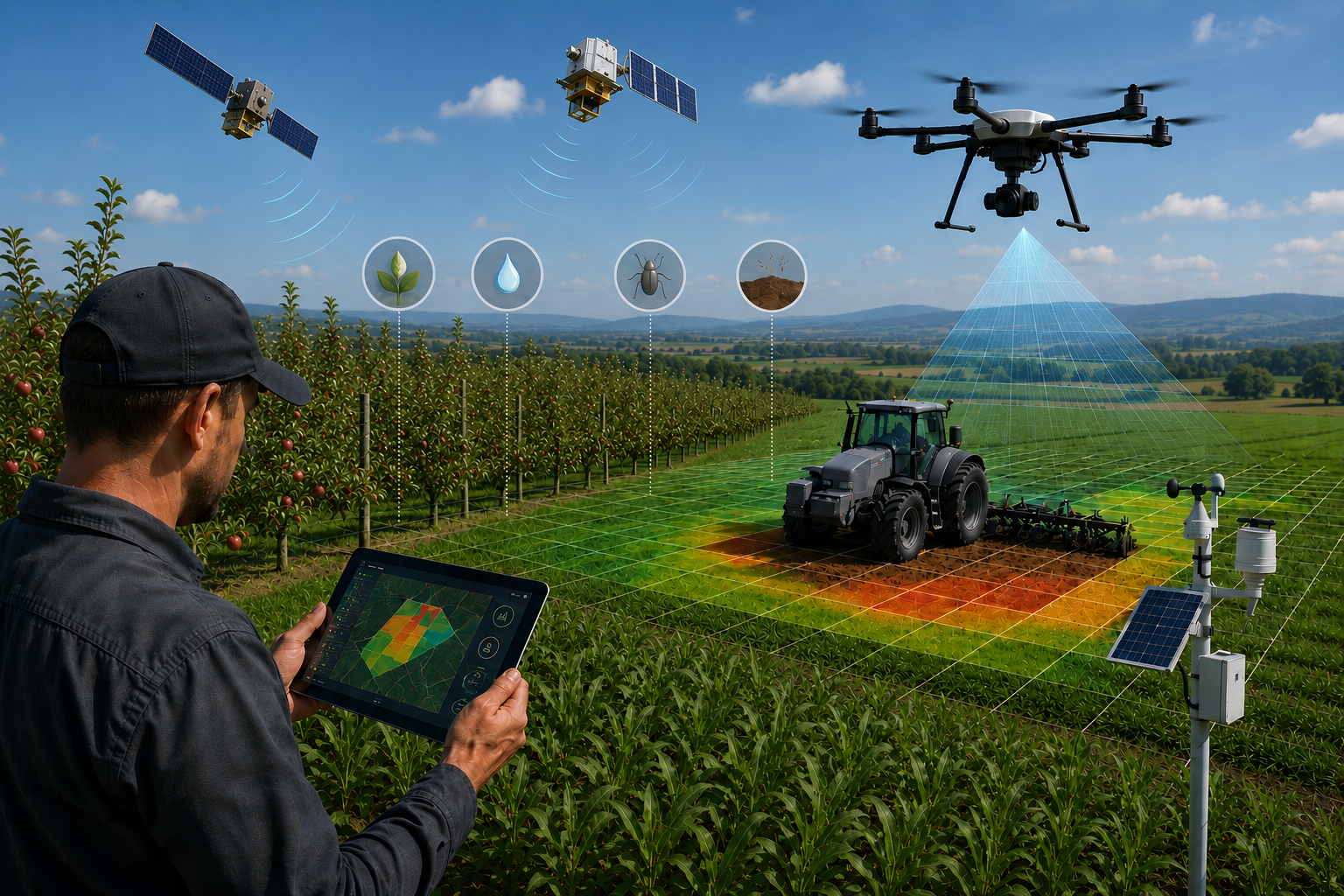
In an increasingly demanding, globalized agricultural context conditioned by climate change, training in Precision Agriculture and associated digital technologies has ceased to be an option and has become a strategic necessity. The use of sensors, geospatial data, sophisticated agricultural machinery and advanced analysis tools makes it possible to optimize resources and reduce costs while increasing the efficiency of operations, the productivity of plots and the sustainability of farms. However, this potential can only be fully exploited if professionals in the sector have the appropriate knowledge and skills to acquire the necessary data, interpret it, convert it into information, and use this information and their knowledge to make well-informed decisions. Training in this field not only involves adapting to the present but also leading the digital transformation of the countryside and guaranteeing the future competitiveness of agriculture.
The intensification in Precision Agriculture and digital technologies is specific to the MENAG-i and is not offered in any other master's degree. The fact that the teaching staff of the intensification is an international benchmark in research in the area of Precision Agriculture will allow students to use state-of-the-art equipment during the practical sessions.
What will this intensification bring you?
- Learn how to use Remote Sensing and nearby sensors to obtain data
- Analyse and manage agricultural data to make management decisions
- Learn about commercial and other developing digital technologies
- Apply theoretical-practical knowledge to the resolution of real cases
Training itinerary
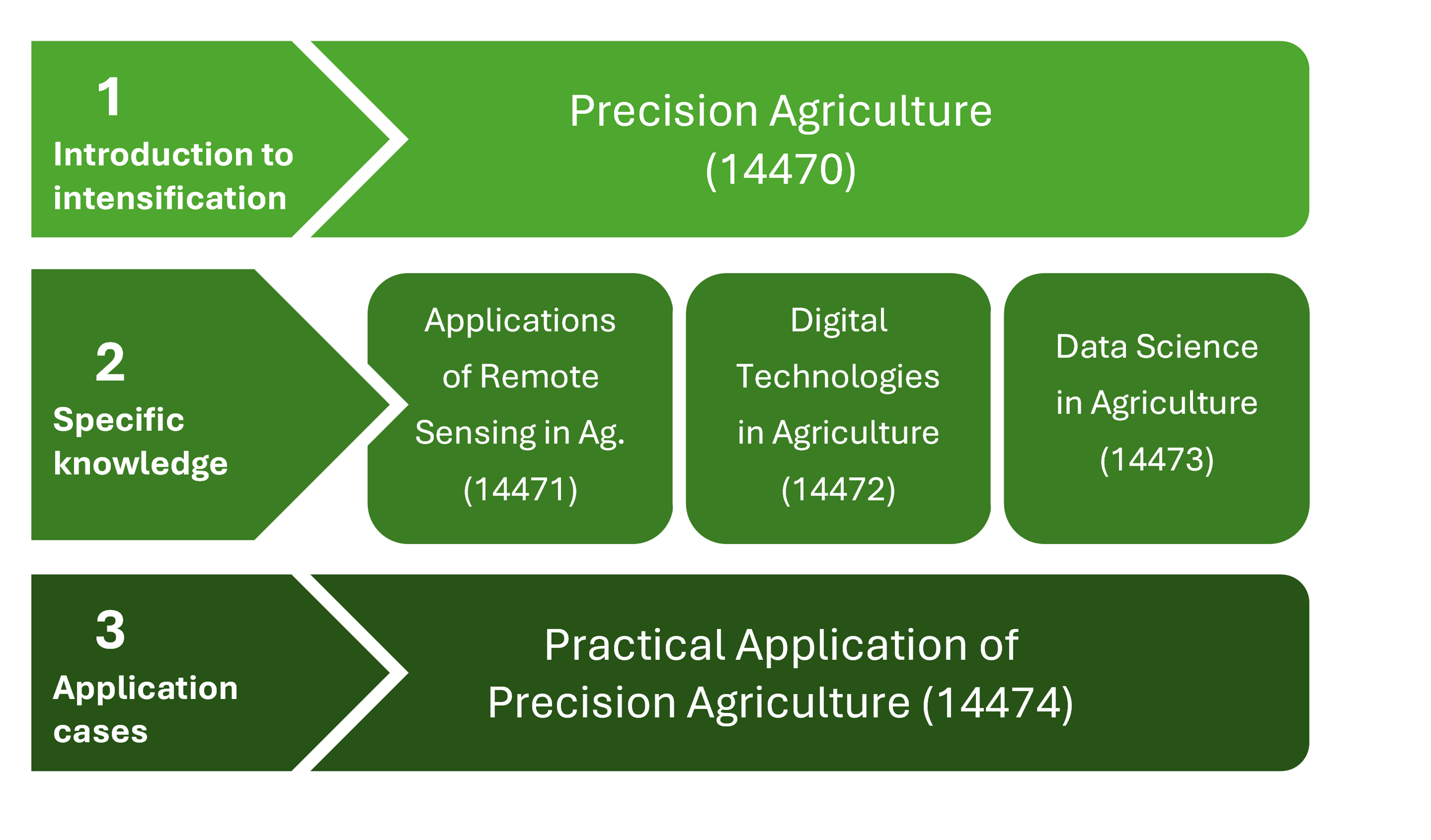
The intensification in Precision Agriculture and digital technologies has been designed to offer students a logical, progressive and structured training itinerary to acquire advanced theoretical and practical knowledge in Precision Agriculture and associated digital technologies. The intensification consists of the five subjects that are shown in the table below, with a total of 28 ECTS. By clicking on the name of the subjects, you will access the corresponding teaching guides where you will find the objectives, contents, teachers and other information for each of them.
|
Subjects |
Code |
Type |
Credits |
|
Precision Agriculture |
14470 |
Optional |
5 |
|
Applications of Remote Sensing in Agriculture |
14471 |
Optional |
5 |
|
Digital technologies in agriculture |
14472 |
Optional |
6 |
|
Data Science in Agriculture |
14473 |
Optional |
3 |
|
Practical Application of Precision Agriculture |
14474 |
Optional |
9 |
The subject Precision Agriculture (14470) provides a general introduction to the subject with some practical examples in the use of sensors, GNSS receivers and decision support systems. The following three subjects address and develop specific techniques, technologies and methodologies such as remote sensing (Applications of Remote Sensing in Agriculture, 11471), digital technologies for data acquisition and process control (Digital Technologies in Agriculture, 14472) and the analysis and use of the data generated (Data Science in Agriculture, 14473). Finally, the subject Practical Application of Precision Agriculture (14474) proposes a series of real cases that will allow students to apply all the knowledge achieved.
 Given that the optional credits to be taken depend on each origin degree and speciality, those students who have taken a subject specifically focused on Precision Agriculture in the degree could do without the registering the subject Precision Agriculture (14470).
Important recommendation
This recommendation is aimed at all students who wish to take this intensification but, especially, those who have not taken any subject specifically focused on Precision Agriculture during the degree:
|
Given the novelty and rapid evolution of the contents of this intensification and given that each subject addresses a specific content that is quite interesting and necessary, it is recommended that all students take all the subjects of the intensification and do so in the established order to achieve all the necessary knowledge. This will allow an orderly and complete training, without missing essential knowledge for the professional practice of Precision Agriculture. |
Teachers of the intensification
The teaching staff of the intensification in Precision Agriculture and digital technologies of the Interuniversity Master's Degree in Agricultural Engineering comes from the Universitat de Lleida and the Universitat Politècnica de Catalunya and stands out for their extensive experience in teaching and research in Precision Agriculture.
On behalf of the Universitat de Lleida, most of the teaching staff is member of the Research Group on AgroICT and Precision Agriculture. Among them are:
- Jaume Arnó
- Àlex Escolà
- Eduard Gregorio
- Jordi Llorens
- José Antonio Martínez
- Lluís Miquel Pla
- Leire Sandonís
On behalf of the Universitat Politècnica de Catalunya the teaching staff is:
Professor Emilio Gil and Dr. Javier Campos and Dr. Jordi Llop belong to the Agricultural Mechanization Unit (UMA) of the Universitat Politècnica de Catalunya.
In addition to the aforementioned teaching staff, there are other researchers, professionals and companies with proven expertise in Precision Agriculture that participate in the intensification. Among them are the following:
- José Ramón Acín (Finca Bizcarra – Agrarium)
- Joaquim Bellvert (IRTA)
- Jaume Casadesús (IRTA)
- Mireia Rúbies (Suagro S.L.)
- María Videgain (EPS Huesca – Unizar)
- AG-Group
- Fertiplan
- Koan Irrigation
- Raimat
Career opportunities
Once the intensification has been completed, new professionals must be able to work in the following areas:
- Modern technical management of agro-technology companies and farms
- Consultancy in Precision Agriculture and Digital Technologies
- Provision of services related to Precision Agriculture
- Digital agricultural data management
- Agricultural research and innovation
- On-farm experimentation
Train yourself in the agriculture of the future
Specialize in one of the areas with the greatest projection of the agricultural sector and contribute to a more efficient and sustainable future. Put technology, data and sustainability at the service of the agricultural sector.